
Postdoctoral Research Fellow in Responsible and Multimodal AI
Nanyang Technological University · Singapore
2026 – Present
I am a Postdoctoral Research Fellow at the College of Computing and Data Science (CCDS) of Nanyang Technological University, working with Prof. Wenya Wang in the GLINT Lab. I hold a doctorate (Dr. rer. nat.) in Computer Science from Freie Universität Berlin, where my research centered on responsible AI, with particular emphasis on the explainability and reliability of machine learning and general AI systems. Before that, I worked on related topics at the L3S Research Center at Leibniz Universität Hannover.
Building on several published works in feature attribution, my long-term research vision is to advance explainability methodologies that move beyond individual feature importance and provide deeper insights into the behavior of increasingly complex AI systems, e.g., LLMs and VLMs. In particular, I am now exploring higher-order feature interactions, data attribution, and the use of explanatory information as practical tools for improving the reliability, transparency, and sustainability of deep learning systems.


Extends proxy gradient estimation (previously introduced in GEFA @ICML'25) to investigate higher-order feature interactions. The proposed framework establishes theoretical equivalence to the Shapley Interaction Index and enables efficient, pixel-level interaction estimation, providing fine-grained insights into cross-modal concept alignemnt.


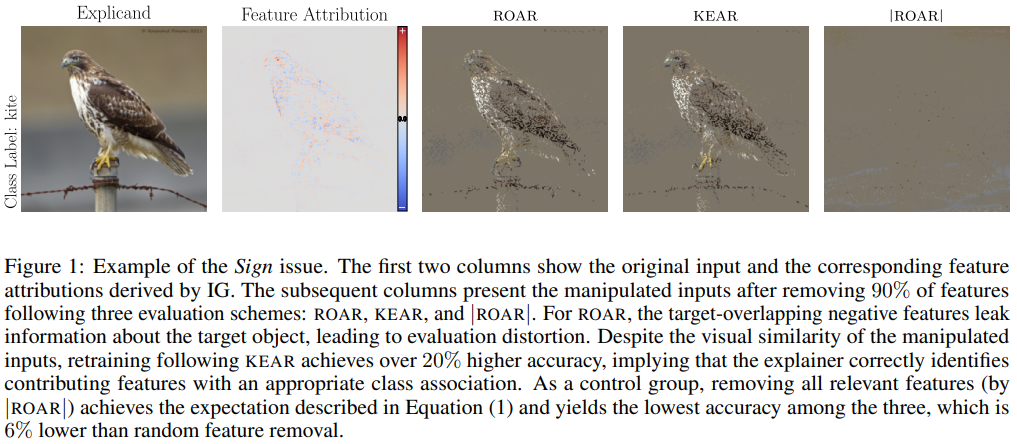
Revisits widely-used retraining-based evaluation for feature attribution, demonstrates its pitfalls, and proposes alternative efficient, distortion-free schemes for assessing explanation quality.
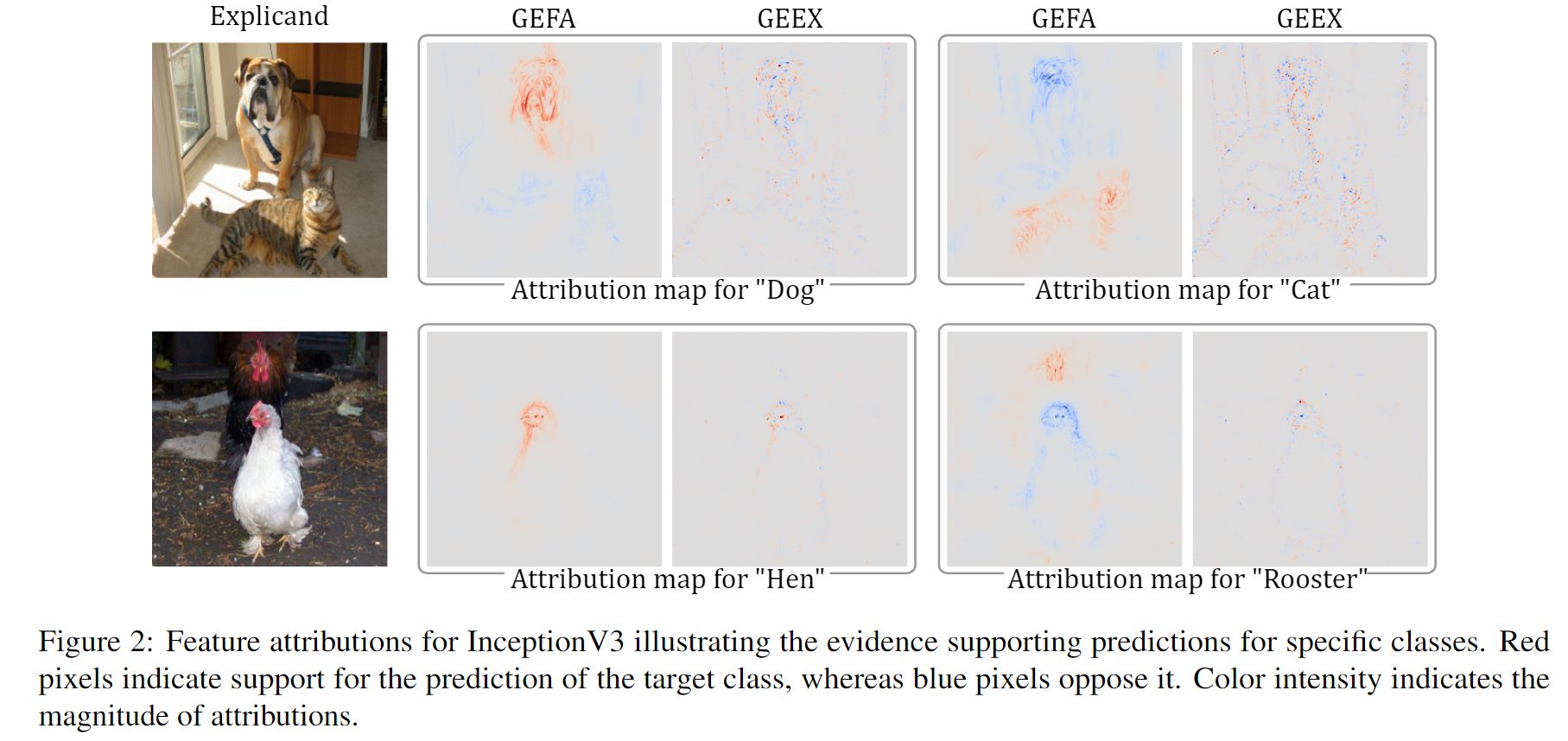
Derives a feature attribution framework based on proxy gradient estimation. The proposed method provides an unbiased estimation of Shapley values, which is generally applicable to different model architectures and data modalities.
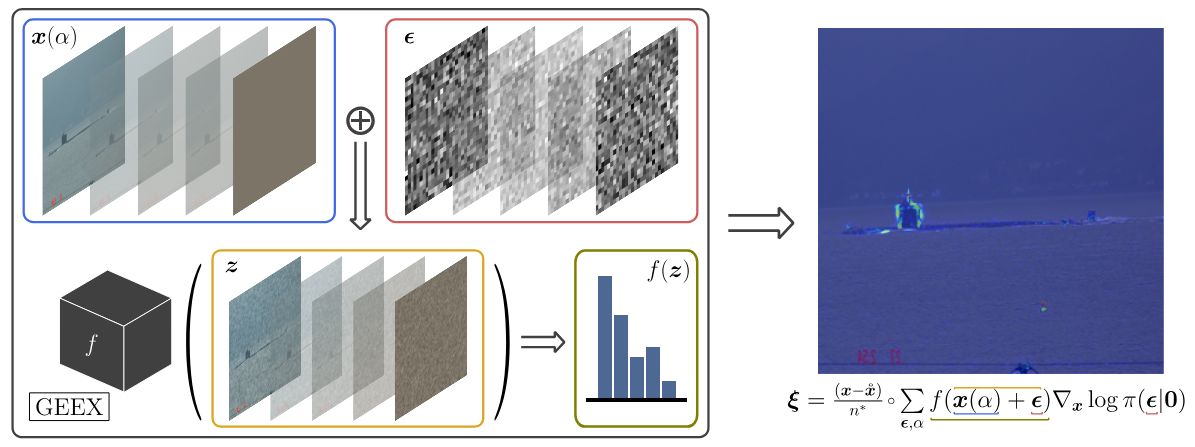
Explores the possibility of delivering gradient-like attributions with only query-level access. The resulting preserves a set of promising axioms of the white-box approaches and demonstrates competitive performance in the empirical experiments
AIgenCY shall explore fundamental research on existing and forthcoming threats for and through generative AI, particularly large language models and foundation models. At the same time, suitable measures are to be developed to improve the detection of and defence against such cyber attacks.
The independent think tank iRights.Lab founded the centre in partnership with the institutes Fraunhofer AISEC and IAIS as well as the Freie Universität Berlin. As a forum for debate in Germany, the CTAI makes the developments surrounding societal questions about artificial intelligence and algorithmic systems tangible.

Artificial intelligence (AI) technologies are the driving force behind digitization. Due to their enormous social relevance, a responsible use of AI is of particular importance. The research and application of responsible AI is a very young discipline and requires the bundling of research activities from different disciplines in order to design and apply AI systems in a reliable, transparent, secure and legally acceptable way.

The demand for automated damage detection in the field of civil infrastructures is high, for economic and safety reasons. This collaborative research project aims to contribute to a further development of automated damage detection in wind energy turbines based on acoustic emission testing (AET) and machine learning.